What Is Chess Gear — And Why Does It Matter?
Chess equipment is everything you use to play the game: your board, pieces, clock, bag, and accessories like scorebooks or digital boards. Whether you’re playing your first game at home or competing in a rated tournament, the right equipment shapes how the whole experience feels.
Good gear makes chess more enjoyable. It helps you focus, play better, and avoid frustrating distractions — like pieces that tip over mid-game or a clock that glitches during a blitz match. This guide covers everything you need to build the perfect chess kit for your level and style, from beginner-friendly basics to full tournament setups.
What Chess Equipment Do You Actually Need?
The Essentials: Board + Pieces
You need two things to play chess:
Chess board: Any flat surface with 64 squares works, but a standard tournament board is 20 inches with algebraic notation (a–h, 1–8). Smaller boards are fine for casual play.
Chess pieces: A full set of 32 pieces in two colors. Staunton-style pieces are the universal standard for clubs and tournaments worldwide.
Without these two, you’re imagining the game more than playing it.
Optional (But Highly Recommended) Gear
Chess clock: Technically optional, but it deserves to be in the essentials category. A clock keeps games moving, adds real tension, and is required for any serious or timed play — especially blitz and rapid formats.
Chess bag: Essential if you play at a club, school, or travel to tournaments. A good bag keeps your board, pieces, and clock together and protected.
Notation pad or scorebook: Useful for recording your games, especially in tournaments or coaching sessions. Reviewing your own games is one of the fastest ways to improve.
Tournament Chess Equipment Checklist
Having the right chess equipment is especially important if you plan to compete
- Tournament-sized Staunton chess set
- Vinyl or wooden board with algebraic notation
- Digital chess clock (DGT 3000 or equivalent)
- Scorebook or notation sheets
- Chess bag to carry everything
- Optional: spare queen for pawn promotion
Most open tournaments require players to bring their own board, pieces, and clock — so it’s worth investing in a complete kit if you plan to compete.
Chess Sets: Materials, Sizes & Styles
Wood vs. Plastic vs. Metal Chess Sets
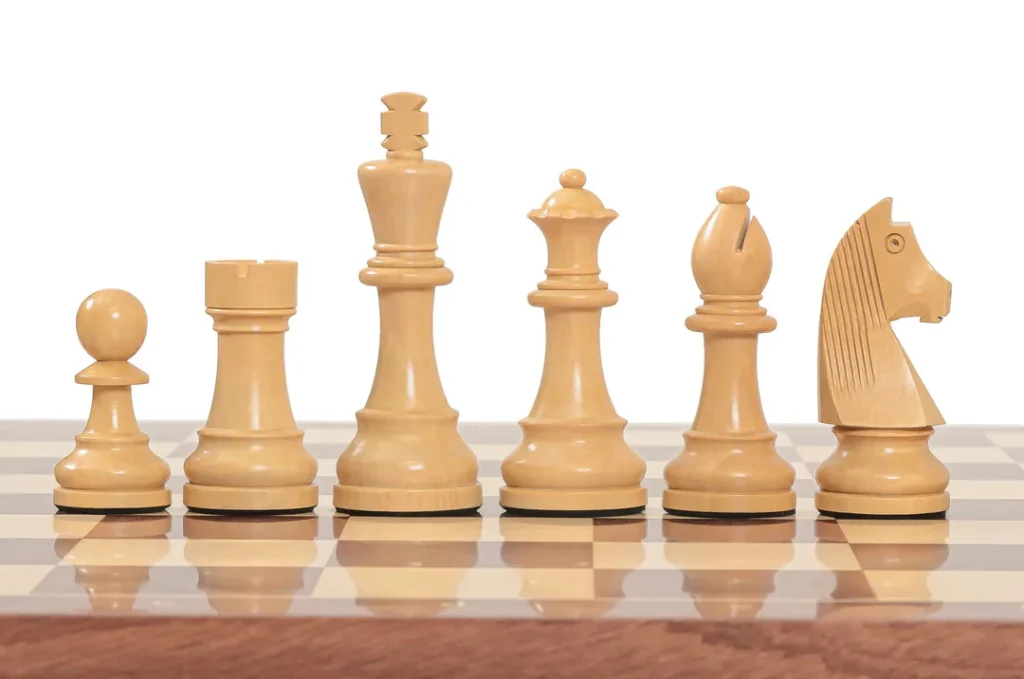
Wooden chess sets are the classic choice, and every serious chess player should own at least one. They have a timeless quality — the weight, texture, and appearance just make the game feel more real. A well-made wooden set can last decades.
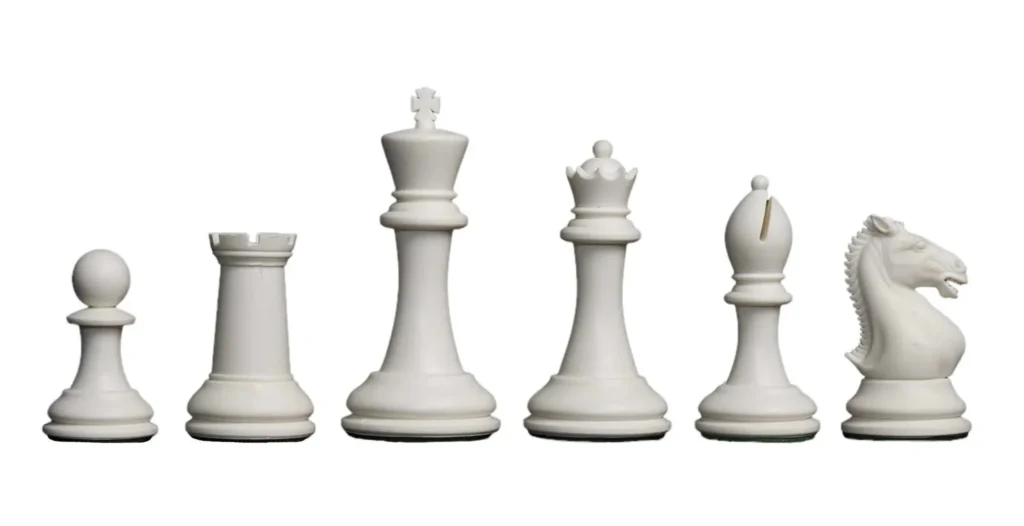
Plastic chess sets are the most practical option for regular play. A good weighted plastic set paired with a roll-up vinyl board is affordable, nearly indestructible, and fits in any chess bag. They may not look as prestigious as wood, but quality plastic sets are perfectly suitable for club and tournament use.
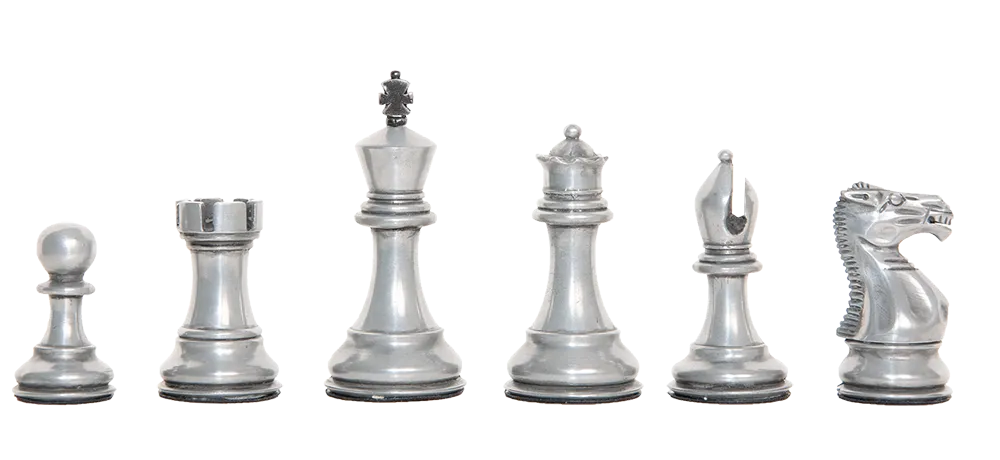
Metal chess sets occupy a niche of their own. They don’t have the traditional charm of wood or the portability of plastic, but they bring a genuine sense of elegance and often feature creative, artistic designs. The price usually reflects that premium — they’re a passion purchase more than a practical one.
Chess Set Sizes: Club, Tournament, Travel, and Display
Club sets are the all-rounders: large enough to see clearly across the board, sturdy enough for daily use.
Tournament sets follow standardized size rules — king height around 3.75 inches, board squares 2.25 inches — so you play on a consistent surface regardless of the venue.
Travel sets are compact and lightweight, often magnetic or with pegged pieces to prevent pieces from sliding or getting lost during transport.
Display sets are for showing off: oversized, decorative, or made from premium materials. Not the most practical for actual play, but they can be a stunning centerpiece.
What Is a Staunton Chess Set?
The Staunton design is the official standard for chess pieces, used in clubs and tournaments around the world. You’ll recognize it by its clean, functional look: a horse-head knight, an easily distinguishable bishop, and a stable weighted base on each piece. The design dates to 1849 and has remained the standard ever since — because it works. Each piece is immediately recognizable, which is critical during fast games. If you’re buying one set for serious play, Staunton is always the right choice.
Best Chess Sets for Beginners and Kids
For beginners or children, prioritize durability and clarity over fancy aesthetics. A weighted plastic Staunton set with a roll-up vinyl board is ideal — affordable, nearly unbreakable, and easy to carry. High-contrast colors help new players distinguish pieces at a glance, and a larger king makes the board easier to follow. For younger kids, themed sets (dragons vs. knights, animals, etc.) can make learning genuinely fun.
Luxury Chess Sets for Collectors
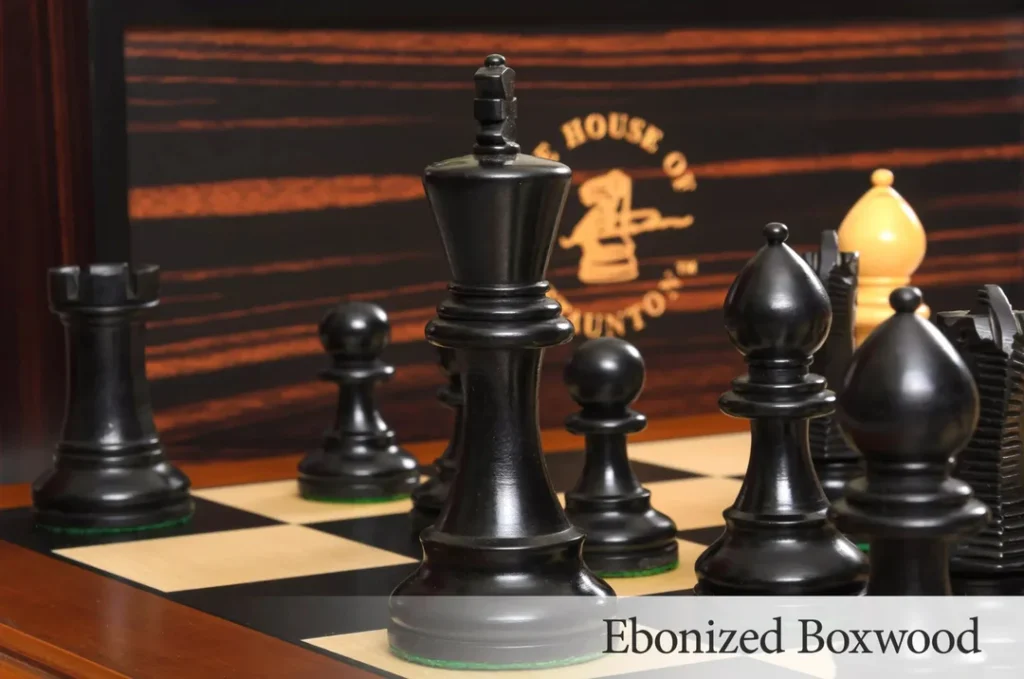
Luxury chess sets sit at the intersection of sport and art. These can be crafted from exotic woods like ebony or rosewood, premium metals, marble, or hand-blown glass. Many are hand-carved and paired with beautifully inlaid boards. Prices range from a few hundred to several thousand dollars — these are collector’s items as much as they are playing sets, and the best ones appreciate in value over time.
Choosing the Right Chess Board
The board is just as important as the pieces. A good board makes games more enjoyable, easier to follow, and more beautiful to look at. The right choice depends on how often you play, where you play, and what style you prefer.
Wooden Boards vs. Roll-Up Vinyl Boards
Wooden boards are the classic choice for home and club play. They look elegant, feel solid underfoot, and pair perfectly with wooden or weighted plastic pieces. Properly maintained, a quality wooden board will last a lifetime and actually improve with age.
Roll-up vinyl boards are the practical choice for travel and tournament play. They’re light, compact, and can be rolled up and stored in almost any chess bag. They pair well with any piece type and are easy to replace if damaged — which is why they’re the overwhelming favorite among competitive players.
Chess Board Size Guide
Choosing the right board size is more important than most players realize. The standard for tournament play is 2.25-inch squares, which pairs correctly with pieces that have a king base of around 1.75 inches. If your squares are too small, the board feels cramped. If they’re too large, reaching across the board becomes awkward.
A simple rule: your square size should be roughly half an inch larger than your king’s base diameter.
| King Base Size | Recommended Square Size |
|---|---|
| 1.5 inches | 2.0 inches |
| 1.75 inches | 2.25 inches |
| 2.0 inches | 2.5 inches |
Why Algebraic Notation Squares Matter
Boards with algebraic notation (letters a–h along the bottom, numbers 1–8 along the side) are invaluable for beginners learning to record moves, study openings, and follow chess books. Almost all tournament boards include notation, and getting comfortable with it early is a genuine advantage. That said, some experienced players prefer a clean board without markings for a more minimalist aesthetic — both are perfectly valid.
Folding Boards vs. Flat Boards
Folding boards are convenient for storage and casual home play. The main drawback is that lower-quality folding boards don’t always lie completely flat, which can be mildly distracting during games.
Flat boards don’t fold, but they stay perfectly level on any table. They’re preferred for serious play and display setups. The trade-off is they’re bulkier to transport.
See also: Best Travel Chess Boards | Chess Board Sizes Explained
Chess Clocks: Do You Need One?
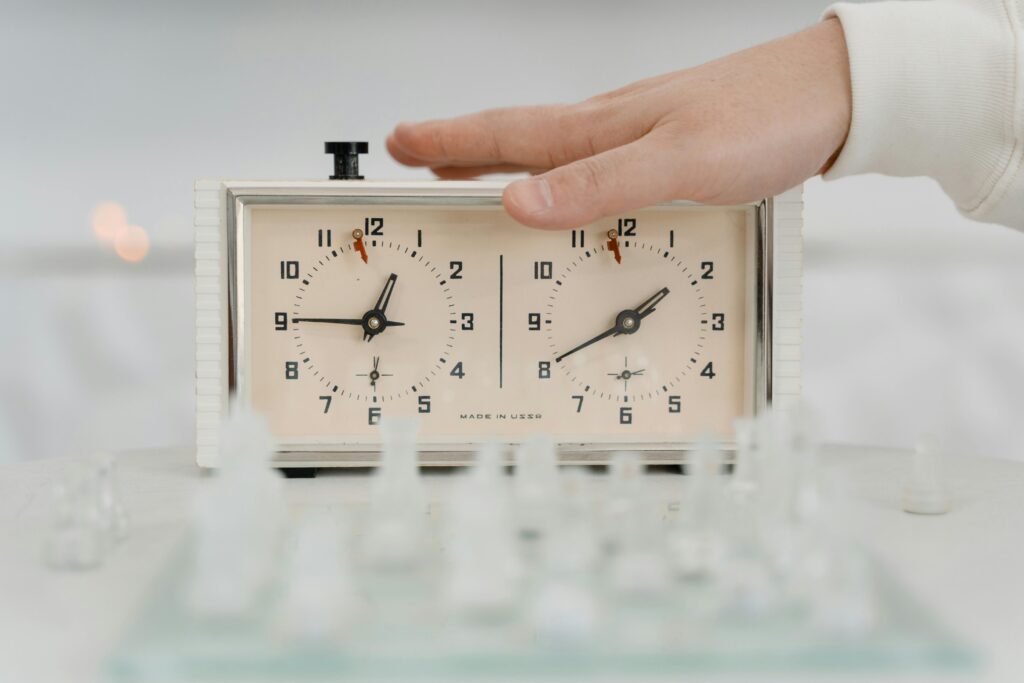
A chess clock does more than track time — it keeps games fair, creates genuine tension, and prevents matches from dragging on indefinitely. In casual home games, it adds an exciting new dimension. In tournaments, it’s mandatory: both players are given equal thinking time, and using it wisely becomes part of your strategy.
If you play exclusively at home without any time pressure, you can get by without one. But if you’ve joined a club, started playing blitz or rapid games, or plan to enter a tournament, a chess clock is essential equipment.
Why a Clock Changes the Game
Without a clock, a player could spend twenty minutes on a single move. With one, both players must think efficiently and manage their time carefully. In fast formats like blitz and bullet, the ticking clock creates a form of pressure that dramatically changes the character of the game. In longer classical games, it prevents analysis paralysis and keeps the match progressing.
Analog vs. Digital Chess Clocks
Analog clocks are the original — mechanical, with clock hands and a satisfying tick. They don’t require batteries and have a nostalgic appeal. Their key limitation is they can’t add time per move, which modern tournament formats almost universally require.
Digital chess clocks are the current standard. They support increment (extra seconds added after each move), delay (a pause before your opponent’s time starts), multiple preset modes, and custom time controls. They’re easier to read, more flexible, and required for any serious play today.
Blitz, Rapid, and Classical — Time Controls Explained
Bullet chess is the fastest format: typically 1 minute per player. Pure adrenaline.
Blitz chess gives each player 3 to 5 minutes — still fast, but with slightly more room for strategy.
Rapid chess offers 10 to 25 minutes per player, balancing speed and deeper thinking.
Classical chess is the slowest and most strategic format, with each player given an hour or more. This is the standard for serious competitive play and requires a dependable clock.
Best Chess Clocks for Every Type of Player
For casual home play, a simple digital or analog clock works fine. For club and tournament play, you’ll want a digital clock with increment and delay features — these are often explicitly required in competition rules.
Want specific model recommendations? We’ve reviewed the 7 best chess clocks in 2025 so you don’t have to guess.
Chess Bags, Storage & Portability
If you play chess away from home — at a club, in the park, or at tournaments — the right chess equipment, including a good bag, is one of the best investments. It keeps your gear safe, organized, and easy to transport. Even at home, a dedicated bag protects your equipment and keeps everything together.
Types of Chess Bags: Backpacks, Tubes, and Carriers
Chess backpacks are ideal for players who carry a full kit regularly. Most have dedicated compartments for boards, pieces, clocks, and accessories — exactly what you need for club or tournament play.
Board tubes are designed for roll-up vinyl boards. They protect the board from creasing and are lightweight enough to carry alongside a small piece bag or backpack.
Flat carriers fold around your board with pockets for pieces and fit easily under your arm. They’re compact and great for short trips to a local club.
What to Pack in Your Chess Bag
A well-packed chess bag for tournament or club play should include:
- Chess board (wooden, folding, or roll-up)
- Chess pieces in a pouch or box to prevent rattling
- Chess clock (protected so the buttons don’t get accidentally pressed)
- Notation pad or scoresheets and a pen
- Water bottle and a snack for longer events
Best Bags for Club and Tournament Players
For regular tournament use, a padded chess backpack is the top choice — it protects everything in one organized package. For casual games at a friend’s house or local park, a board tube and piece pouch is often all you need. If you own a beautiful wooden set, a quality storage box with individual slots for each piece will keep them in perfect condition for years.
Optional Gear for Serious Players
Once you have your board, pieces, and clock, you might start looking at accessories that make the overall experience smoother. These extras are popular among club regulars and tournament players.
Chess Scorebooks and Notation Pens
Recording your games is one of the highest-value habits you can develop as a chess player. While tournaments typically provide basic scoresheets, a personal bound scorebook keeps all your games in one place — building a personal archive that’s invaluable for study and coaching.
Weighted vs. Non-Weighted Chess Pieces
Weighted pieces feel more stable on the board, particularly in blitz or rapid games where pieces are moved quickly and sometimes forcefully. The extra heft prevents tipping and gives a satisfying, solid feel when placing a piece down. Non-weighted pieces are lighter and cheaper, but can feel flimsy — especially outdoors on a slightly uneven surface.
Digital Notation Devices
Electronic notation devices record your moves automatically as you play, syncing with a computer for instant game analysis. They reduce the burden of handwriting moves during long games and are particularly useful for coaches and serious club players. They represent a meaningful investment, but for players who analyze their games regularly, they’re worth it.
DGT Electronic Boards and Clocks
A DGT electronic board connects to a computer or live broadcast system, recording each move automatically in real time. This is the same technology used in professional tournaments to stream games online. Paired with a DGT 3000 clock, it creates a complete professional-grade setup — ideal for tournament organizers, content creators, or dedicated players who want instant post-game analysis.
Where to Buy Quality Chess Equipment in 2026
When buying chess gear, you have two main options: online retailers and specialty chess shops. Each has its advantages.
Online retailers like Amazon offer the widest selection, competitive pricing, and fast delivery. They’re ideal for straightforward purchases of well-known products like DGT clocks or standard Staunton sets.
Specialty chess retailers (such as House of Staunton, Chess House, or Chess.com’s store) stock a curated range of higher-end boards, pieces, and sets you won’t easily find elsewhere. They’re the better option for luxury or collector-grade equipment, where photos and detailed specifications matter more.
Trusted brands to look for: DGT (clocks and electronic boards), House of Staunton (premium pieces and boards), and Millennium Chess (digital chess computers and accessories).
Build Your Complete Chess Equipment Kit: Final Checklist
Use this checklist to put together a well-rounded setup for your level:
Beginner Kit:
- Good quality/price plastic set – must have for no problem travel:
you go play at a friend’s house or you go on vacation and don’t want to worry? Pick this one - Entry-level digital clock (LEAP PQ9907S or Chess Armory)
Club Player Kit:
- Quality wooden or weighted plastic Staunton set
- Wooden or quality vinyl board
- DGT North American clock
- Chess backpack (for non wooden fragile chess sets any relatively felted backpack will do the job.)
Tournament Player Kit:
- Championship Chess Set (triple-weighted recommended)
For going to tournaments, the plastic and cheap wooden sets are completely fine. I would even recommend them for this use. The thing is to consider if you want a nice wooden chess set for home. - Vinyl or wooden board with notation (2.25-inch squares, once you play on a real sized chess board, you won’t go back to any smaller squares)
- DGT 3000 clock
- Scorebook and pen
- Spare queen for pawn promotion (most chess sets come with it)
What’s Next?
Now that you know what equipment to look for, the next step is finding the right products for your specific needs and budget.