
Looking for the right chess clock?
You’re in the right place.
A chess clock isn’t just a timer, it adds pressure,
pace and fun to the game.
Whether you play fast blitz or slow classical games,
the right clock makes a difference.
Some clocks are hard to use or don’t last, but the best ones are easy, clear, and reliable.
We’ve picked out the 7 best chess clocks in 2025, including both digital and analog options. Whether you’re just starting out or playing in tournaments, you’ll find one that fits your style and budget.
| Chess Clock | Best For | Price Range | Buy Link |
|---|---|---|---|
| DGT 3000 | Advanced Players & Tournaments | $$$ | View on Amazon |
| DGT North American | Club Players | $$ | View on Amazon |
| LEAP PQ9907S | Budget Pick | $ | View on Amazon |
| ZMF-II | Blitz & Bullet Players | $$$ | View on Amazon |
| BHB Analog | Classic Style | $$ | View on Amazon |
| Garde Circle Clock | Premium Display & Style | $$$$ | View on Amazon |
| ChessArmory Digital | Beginners & Schools | $ | View on Amazon |
1. DGT 3000: The Tournament Standard
The DGT 3000 is the go-to chess clock for serious players and official events. It’s actually the one used in top-level FIDE tournaments. It features a large, clear display that shows both the main time and seconds simultaneously, even when you’re not in time trouble. Which most other clocks don’t do.
It comes preloaded with multiple time controls, including increment and delay, and supports custom settings for everything from blitz to long classical games. If you’re using a DGT electronic board, you can even connect this clock for full integration — perfect for live broadcasting or notation syncing.
The buttons are responsive, the design feels professional, and overall, it’s the most complete clock on the market. If you’re planning to compete regularly or just want something reliable that’ll last for years, this is the safest bet.
Pros:
– FIDE-approved and used in official events
– Supports all time formats (including custom)
– Big, clear display
– Connects to DGT e-boards
Cons:
– More expensive than others
– Overkill for casual players

2. DGT North American: Club Player’s Favorite
Designed specifically for the U.S. market, the DGT North American is the clock you’ll see in most US Chess Federation club tournaments. It’s lighter than the DGT 3000 but still offers solid functionality. It supports increment and delay, has intuitive menu navigation, and comes with 23 preset modes to get started quickly, so to be honest, you won’t need more in most cases.
The screen is easy to read (though smaller than the 3000), and it’s powered by two AA batteries that last a long time. The buttons are slightly softer than some players prefer, but they’re consistent and durable. It’s not FIDE-certified (due to some minor formatting), but for 99% of players, that won’t matter.
If you’re serious but not professional, this is probably the best balance of price, quality, and features.
Pros:
– Trusted by clubs across North America
– Easy to set and use
– Long battery life
– Great for all skill levels
Cons:
– Not FIDE-approved
– Buttons could be more tactile

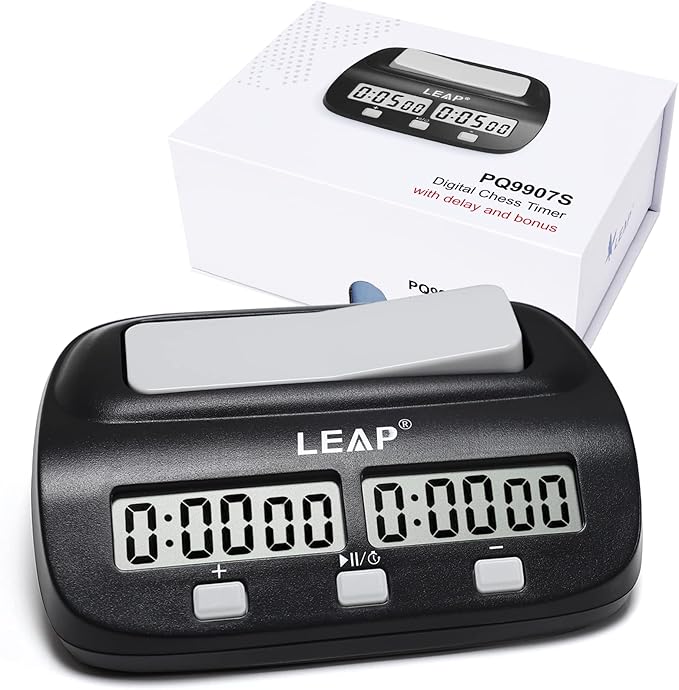
3. LEAP PQ9907S: Best Budget Clock
If you’re looking for a very affordable digital clock that still does the job, the LEAP PQ9907S is a great pick. It supports increment, delay, count up/down, and has large buttons for easy use. It’s especially popular among casual players, students, or anyone on a tight budget.
The plastic build is lightweight and simple, and while the clock doesn’t feel “premium,” it’s surprisingly reliable. The display is slightly more basic than higher-end models, but it gets the job done.
If you’re just starting out, want a backup clock, or need something for casual games, this is one of the best clocks under $30.
Pros:
– Very affordable
– Easy to use for beginners
– Includes both increment and delay
– Lightweight and portable
Cons:
– Not as durable or “clicky”
– Basic screen, limited features
4. ZMF-II: Blitz & Bullet Specialist
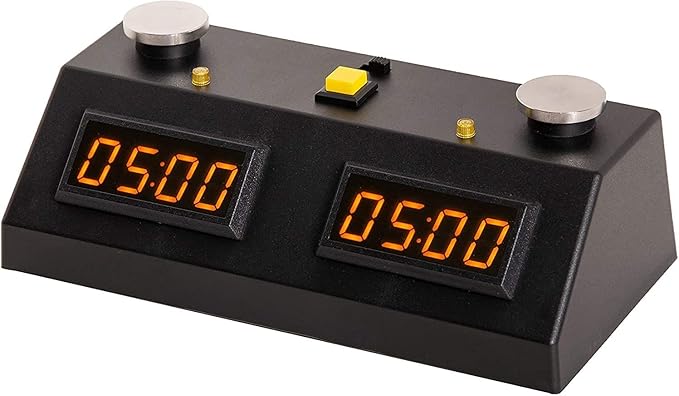
Built like a tank and designed for speed, the ZMF-II is beloved by blitz players around the world. This chess clock immediately makes me think of the crazy fast games played by Hikaru
in coffee chess!

The large, ultra-tactile buttons are satisfying to press and incredibly responsive making it ideal for lightning-fast time controls.
It features delay, increment, count up/down, and custom modes. The backlit LED display is bold and easy to read even in low light. It’s bulkier than typical clocks and isn’t officially FIDE-certified, but it’s incredibly solid and durable.
If you’re the type of player who plays aggressive, fast-paced chess and wants a clock that keeps up, this one’s a beast.
Pros:
– Fantastic for blitz/bullet games
– Very responsive buttons
– Clear display with optional sound
– Built to last
Cons:
– Not FIDE-approved
– Bigger and heavier than most
5. BHB Analog: Old School & Reliable
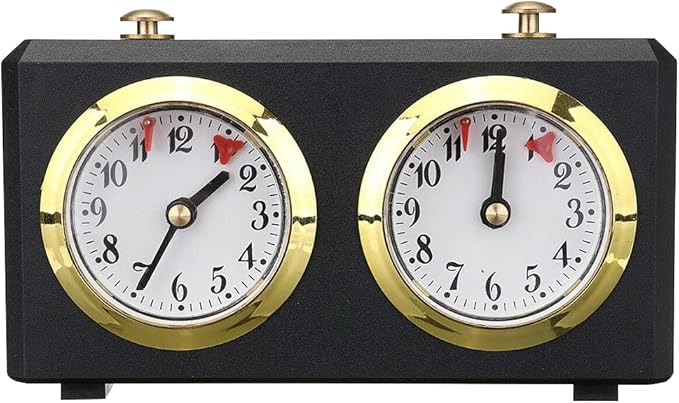
For fans of the classics, the BHB analog clock is an icon. It’s fully mechanical — just wind it up and go — and doesn’t need any batteries. That makes it ideal for players who enjoy the feel of traditional equipment, or who want a reliable clock that works forever.
It doesn’t support increment or delay (since it’s analog), so it won’t be legal in modern time controls that require them. But for friendly matches, club play, or display games, it’s beautiful and practical.
Pros:
– No batteries or electronics
– Classic design and ticking feel
– Sturdy and well-made
– Ideal for casual or thematic play
Cons:
– No delay/increment
– Not suited for modern tournaments
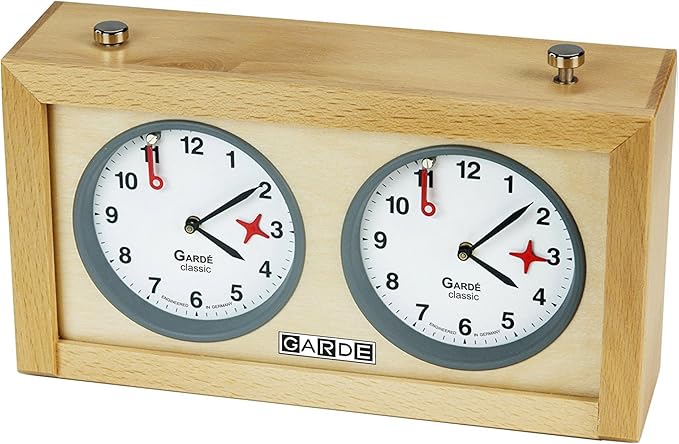
6. Garde Circle Clock: Premium Vintage Look
The Garde Circle Clock is more than just a timer — it’s a collector’s piece. Handcrafted in Germany, this analog clock has a metal-rimmed circular design that looks amazing next to a wooden board. It feels like something out of a 1970s world championship.
Like the BHB, it’s mechanical — no batteries or digital display. It’s mostly for enthusiasts who love classic chess gear or want to display a beautiful clock on their board.
It’s not cheap, and it’s not for everyone. But if you want something unique and aesthetic, this one’s unmatched.
Pros:
– Gorgeous and rare design
– Handcrafted and durable
– Great for display or classical games
Cons:
– Expensive
– No modern timing features
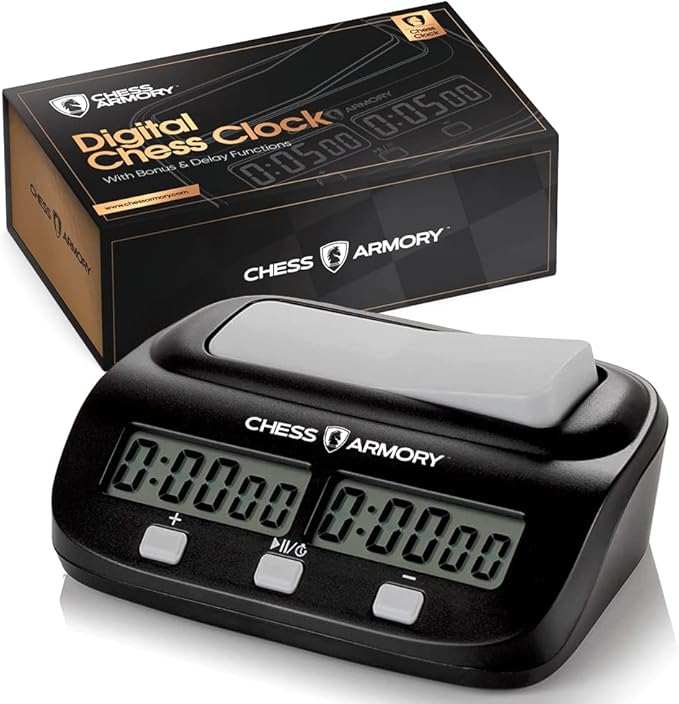
7. Chess Armory Digital: Best for Beginners
This clock is perfect for new players, schools, or clubs running casual tournaments. It’s inexpensive, easy to use, and doesn’t come with confusing menus. You can set up basic time controls in seconds, and it works reliably.
It’s not made for intense tournament use, and it lacks some of the polish of higher-end clocks, but it’s an excellent place to start.
Pros:
– Perfect for beginners or kids
– Low cost
– Simple and functional
Cons:
– No advanced time control options
– Build quality is basic
What is the best chess clock for serious beginners?
The DGT North American is perfect for serious beginners. It’s simple to set up, rather budget-friendly, and approved for tournaments. It also includes delay and increment features.
What kind of chess clock do I need for tournaments?
You’ll need a digital clock that supports increment, like the DGT 3000 or DGT North American.
Can I use an analog chess clock in official games?
No. Most official tournaments require digital clocks with increment settings. Analog clocks are outdated and not allowed in FIDE-rated events.
Are mechanical (analog) clocks still worth buying?
Yes, but mostly for collectors or casual play. Mechanical clocks don’t support increment or delay, so they’re not allowed in official tournaments anymore — but they have a classic charm which can make you feel like you are playing at the time of Bobby Fischer or Anatoly Karpov.
Can a clock still be good under $30?
Yes, what matters is that it will still fill the main purpose, only with less features. The LEAP PQ9907S and the Chess Armory clocks are great low-budget options. They’re not as durable as top models but they work well for casual games.
What are increment and delay?
Increment means that after you press your clock, your time goes up for a set number of seconds (e.g. 5 seconds).
Delay means that after you press your clock, your opponent’s clock waits for a set number of seconds (e.g. 5 seconds) before their main time starts ticking down.
What is count up and down?
Count down is what most players use: the clock starts at a set time (like 10 minutes) and ticks down.
Count up starts from zero and just tracks how much time has passed. It’s handy for casual games or reviewing how long a move or game took.
Wrap-Up:
If you’re on a tight budget or just starting out, the LEAP PQ9907S is a very good beginner-friendly choice that won’t break the bank.
If you’re unsure and want the best value for money, the DGT North American hits the sweet spot: reliable, easy to use, and trusted by club players everywhere. It is excellent and can follow you from the beginner to the professional level.
For serious tournament players, or anyone using a DGT electronic board, the DGT 3000 is hands-down the best chess clock you can buy in 2025.
As for the more unique clocks like the Garde Circle, BHB Analog, or the ZMF-II, you’ll know if they’re right for you. They serve special purposes and offer something distinct.
No matter your style or level, there is a clock in here that will level up your game.